






Chad’s Blog
Pragmatic Technologies for Life and Business Success®
This week’s Raising the Barr is intentionally different. In the spirit of Rosh Hashanah,
I am sharing one article without the usual carousel or video,
leaving more room for reflection.
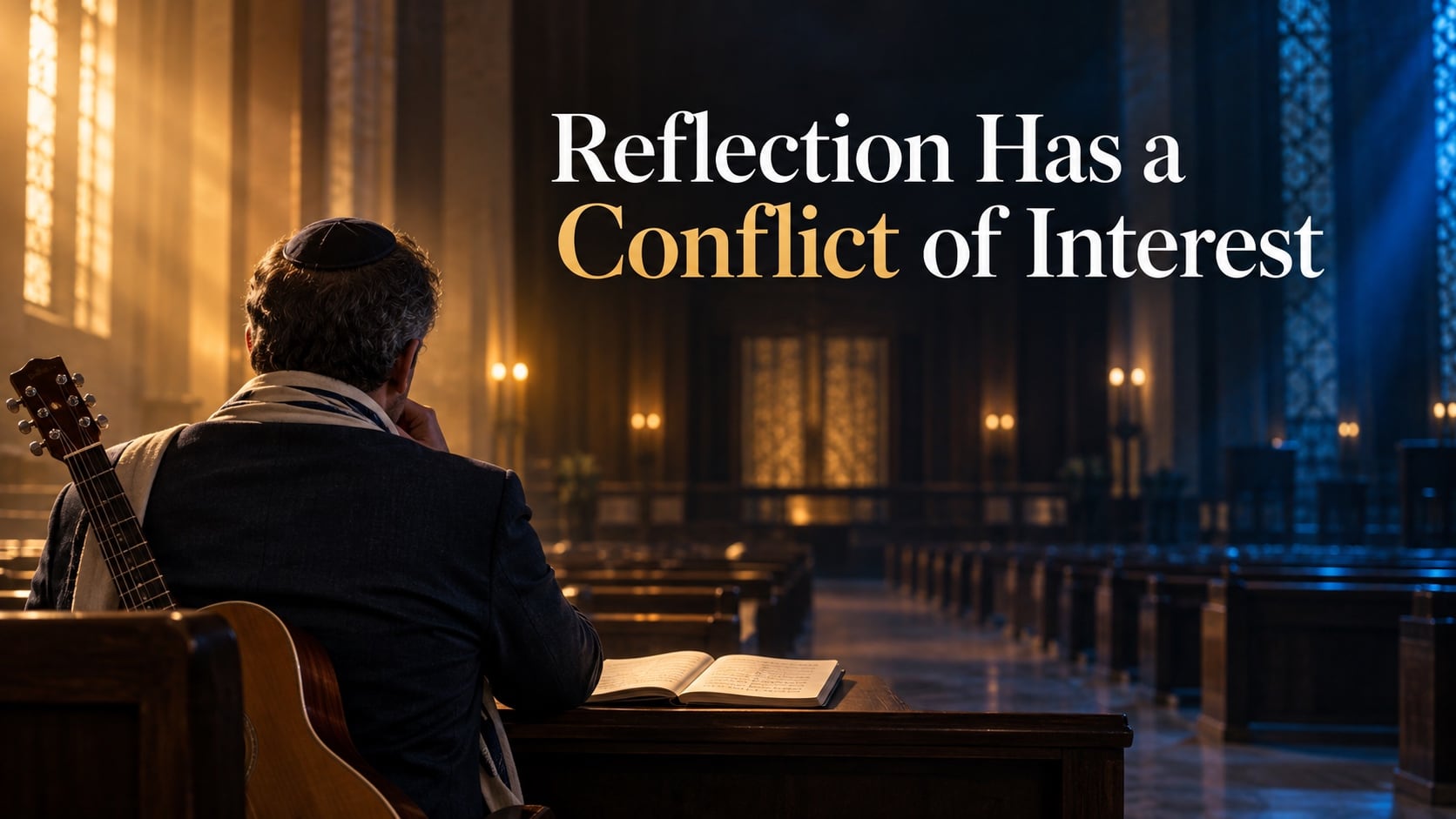
For most of my life, reflection was a private meeting between me and myself. I never questioned the obvious conflict of interest. I was the person under examination, but I also controlled the questions. I presented the evidence, explained the circumstances, defended my decisions, and delivered the verdict.
That arrangement sometimes produced genuine insight. It also made reflection dangerously easy to turn into negotiation. We revisit our choices, acknowledge what could have gone better, and quietly construct explanations that allow us to leave the room fundamentally unchanged.
This week begins Rosh Hashanah, the Jewish New Year, followed by Yom Kippur, the Day of Atonement. I have always loved this time of year because it creates space for serious reflection. Since I reflect weekly, and often daily, the High Holy Days feel like reflection on steroids. This year, however, reflection has taken on a different meaning.
For the first time, I am entering this season with something I did not have before: an AI thinking partner capable of examining not only my decisions, but also the explanations I have created around them.
That became uncomfortable during Session 5 of the AI Insider Lab I run. I record each session and make the video available exclusively to members through the AI Insider Lab portal. YouTube creates a transcript of the recording, which I then have AI analyze for patterns, tensions, and insights that may not have been apparent during the live conversation.
The insights from those post-session analyses have been profound. In its analysis of Session 5, AI surfaced a pattern in my own behavior: my tendency to soften a challenge when a relationship is warm or when an engagement is large. That observation stopped me.
Several founding members of the AI Insider Lab have known me for decades. These are not transactional relationships. They are people I respect, value, and genuinely care about. Yet the conclusion was difficult to dismiss: I may be most likely to go easy on exactly the people who most need my directness. Warm relationships and important engagements can make directness uncomfortable. I thought I was being considerate. I may have been avoiding discomfort. If people trust me to challenge their thinking, protecting the comfort of the relationship may diminish the value I am there to provide.
I had never written that about myself. I am not sure I had allowed myself to think about it that clearly. AI did not uncover a hidden fact. It saw a gap between what I intended and how I behaved, a gap I had not confronted. That is when reflection becomes more than simply looking inward.
As I accompany Laurel while she leads services as the spiritual leader of Temple B’nai Abraham, I am reminded that the High Holy Days never treated reflection as an entirely private exercise. Many of the confessions we recite are spoken in the plural. We acknowledge that human failure does not exist in isolation. Our choices affect one another, and our communities share responsibility for the conditions we help create. Perhaps meaningful reflection was never supposed to be a closed conversation with ourselves.
We need other voices. We need people who can see what we cannot. We need questions we would not think to ask. We need something capable of interrupting an explanation that has become familiar enough to sound like truth.
AI can play a role in that process, but we must be precise about what that role is. AI cannot provide a conscience, seek forgiveness, repair a relationship, or decide who we should become. It cannot perform the profoundly human work of repentance and change. It can, however, make it harder to negotiate with the conscience we already have.
It can ask why the difficult conversation remains unscheduled. It can compare what we claim is important with where our time actually went. It can notice when compassion has become avoidance, patience has become delay, or relationship building has become an excuse for withholding the truth. That capability has serious implications for consultants, advisors, and leaders.
Our expertise makes us better at recognizing patterns in other people. It can also make us exceptionally skilled at defending our own. We know how to build a persuasive argument. We can explain why the initiative stalled, why the opportunity was postponed, why the client was not ready, or why one more round of deliberation was necessary. But the greatest danger in reflection may not be dishonesty. It may be becoming too skilled at believing our own explanations.
This is why I do not want AI merely to summarize my year, celebrate my accomplishments, or help establish my next goals. Those exercises can be useful, but they rarely penetrate the stories protecting my blind spots. A more consequential conversation begins with harder questions:
The lesson AI surfaced has already changed how I conduct myself. I have made progress in being more direct, while recognizing that I must continue holding myself accountable if old patterns begin to return. That may be the real work of this season: not only recognizing where change is needed but remaining accountable for making it.
Rosh Hashanah and Yom Kippur invite us to look honestly at the year behind us and decide how we will enter the one ahead. This year, I will bring my experience, values, conscience, and humanity to that examination. I will also bring a thinking partner instructed not to reassure me, flatter me, or accept my first explanation.
AI cannot make the change for me. But it can challenge the explanations that keep me from changing.
Sometimes the reflection we most need is not the one that shows us who we are. It is the one that refuses to let us look away.
With reflection and gratitude,
Chad