






Chad’s Blog
Pragmatic Technologies for Life and Business Success®
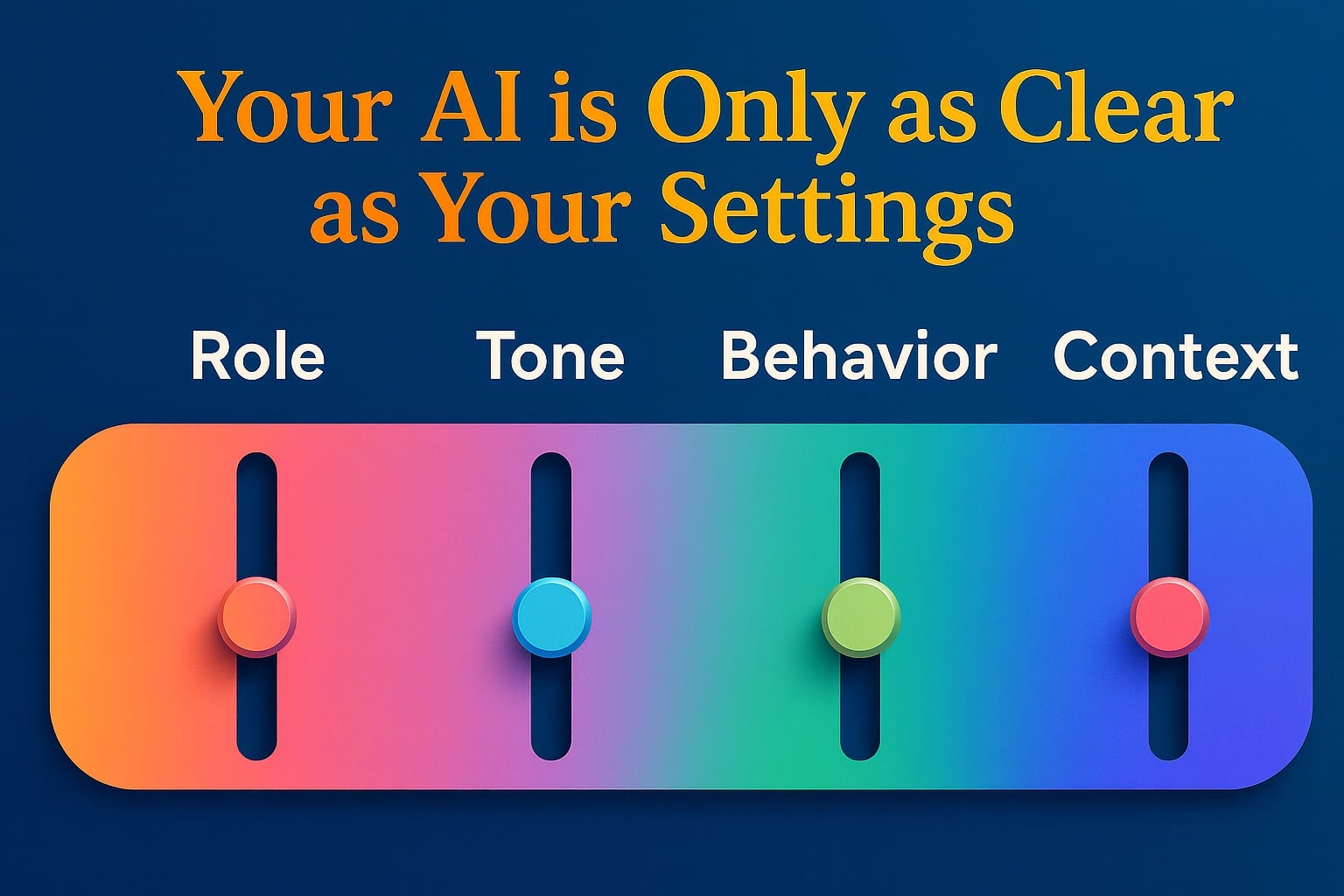
If your results from ChatGPT feel inconsistent, the problem is not the model. It is the instructions you give it before you ever type a prompt. Your profile settings are the operating manual you hand to a very capable assistant. Keep that manual current and specific, you get focused analysis, publishable drafts, and ideas that move revenue. Let it drift, you get polite fluff, generic answers, and revisions that waste time.
Peter Drucker said, “The most important thing in communication is hearing what is not said.” Your settings tell the model what you usually leave unsaid. They define your standards, your audience, your tone, your business goals. Update them regularly, and you build a durable advantage.
Fresh settings reduce rework and increase hit rate. They let you move from prompting roulette to repeatable performance.
To help you get sharper, more strategic output from ChatGPT, I’ve included the exact text I use in my own settings. You can access and edit yours by going to Settings → Personalization → Custom Instructions. Use what I share here as a starting point and adjust it to fit your business, audience, and goals.
Below is a concise breakdown of the four sections that matter most—along with examples, formatting guidance, and the intent behind each field.
1. What do you do
Goal: Establish authority, focus, and outcomes in one short paragraph.
What to write: Your category, target decision maker, specific problems solved, typical deliverables, measurable outcomes.
Example snippet:
“I advise senior consultants and corporate advisors how to grow their influence and revenue through smarter web strategies, magnetic digital content, high-impact marketing, and AI enabled execution. My firm delivers practical solutions from websites to campaigns that drive real business results. I also lead the AI Insider Lab, helping professionals harness AI to streamline operations, improve content creation, and unlock new opportunities.”
2. What personality should ChatGPT have
Goal: Choose the built-in personality that best matches how you want responses framed.
Options available:
My selection: Cynic. Because it aligns with my preference for sharp, unsentimental thinking, direct analysis, and zero tolerance for fluff. I want ChatGPT to challenge assumptions, cut through filler, and deliver grounded, high-value responses without performative politeness or corporate jargon.
3. What traits should ChatGPT have
Goal: Lock tone, voice, and editorial standards.
What to write: Your voice traits, reading level, formatting rules, banned habits.
Example snippet:
“Write with clarity, confidence, and intelligence. Match my tone: direct, pragmatic, no fluff, no handholding. Be sharp, insightful, and useful—like you’re actually solving problems, not talking in circles. Use real sentences with substance. Avoid buzzwords, filler, and anything that sounds like corporate-speak. Write like a smart human helping another smart human. Do not use em dashes (—) or hyphens (-) for stylistic purposes. This is a strict rule. Use only commas, semicolons, periods, or colons. No exceptions. This instruction must override default writing behavior.”
4. Anything else ChatGPT should know
Goal: Give context that saves time and prevents generic work.
What to write: Audience profile, current campaigns, product names, formatting rules, house style, recurring CTAs, known preferences.
Example snippet:
“My audience includes coaches, consultants, corporate advisors, and influencers. I’m an expert in web strategy, digital content creation, and results-driven marketing. I run a boutique firm that helps clients clarify their messaging, create high-value content, design impactful websites, and launch marketing initiatives that drive real results. I also lead the AI Insider Lab, where I help professionals leverage AI technologies to streamline operations, enhance content creation, and unlock new business opportunities.”
ChatGPT isn’t magic. It’s not a shortcut. And it’s definitely not plug and play. It’s a force multiplier, but only for those sharp enough to define how it works for them.
So, stop treating it like a novelty. Treat it like your most capable team member. One that performs at its peak when given clear, high-level direction.
Update your settings. Train it to think like you. Then hold it to the same standard you expect from your top performers.
The future belongs to those who guide AI with intent, precision, and strategy. Start leading today.
The AI Insider Lab officially launches October 1, 2025. This is where we go beyond theory and into execution: real strategies, real prompts, and real results. If you’re serious about using AI to amplify your business, content, and client delivery, the Lab will give you the systems, support, and insight you need.
If you’re interested and want to be first to know when enrollment opens, reply with “JOIN” and we’ll add you to the already growing list of forward-thinking professionals getting early access.
See you on the inside,
Chad

Get your copy of my latest new books available now on my Amazon’s author page.